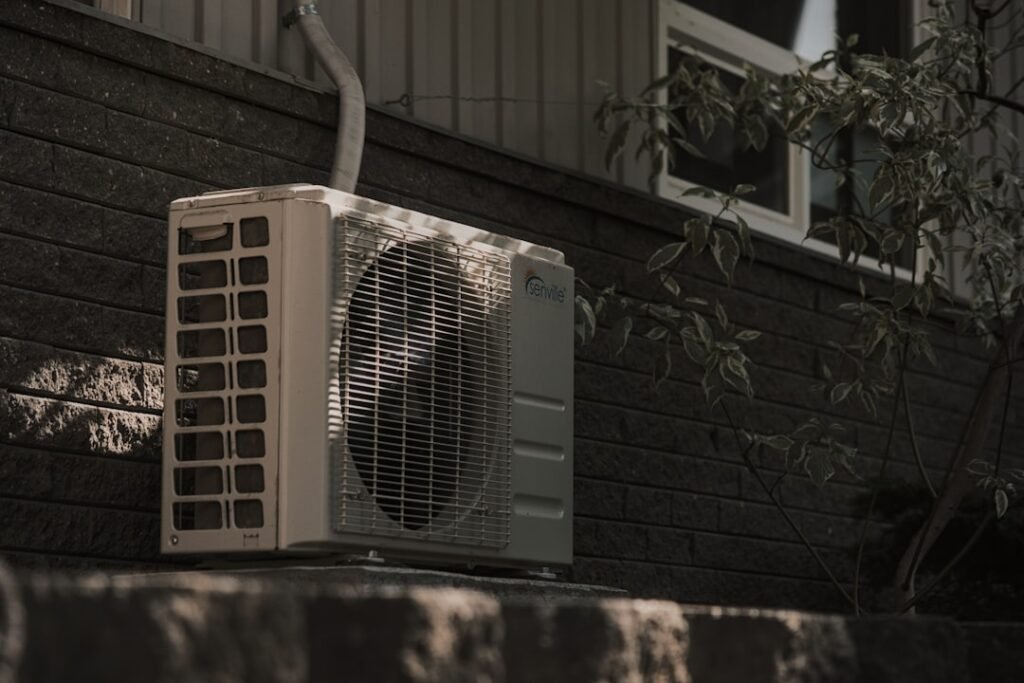
Vietnam’s cooling sector is on track to cut refrigeration-related emissions 97 percent by 2045 under the country’s National Cooling Action Plan, launched by the government in December 2025 — but as officials and industry experts acknowledged at a September 14, 2026 seminar marking World Ozone Day, no tax incentive, subsidy, or preferential loan program exists yet to help the commercial building owners who would have to pay for it. The plan sets the destination. It leaves the financing to be worked out later, on the balance sheets of thousands of individual property owners who have never been asked to think about a refrigerant gas.
What did Vietnam admit at its own Ozone Day seminar?
The seminar, “Global Action for a Cooler Planet,” was convened in Hanoi on September 14, 2026 by Vietnam’s Department of Climate Change (the Ministry of Agriculture and Environment unit responsible for the country’s climate commitments), the Vietnam Economic Association, and the business daily VnEconomy, ahead of World Ozone Day on September 16. The numbers presented there were the point: cooling already consumes more than 25 percent of Vietnam’s national electricity supply and 25.5 percent of its commercial electricity output, according to VnEconomy’s account of the event.
Nguyen Cong Thinh, a built-environment and energy-efficiency expert who spoke at the seminar, put a building-level number on it: ventilation, cooling, and air conditioning account for 40 to 60 percent of a typical building’s total energy consumption. Left unmanaged, VnEconomy reported, cooling electricity demand could triple by 2030 and cooling could account for nearly 10 percent of Vietnam’s national greenhouse gas emissions by that year. The International Energy Agency’s own projection, cited at the same seminar, puts global cooling at 25 to 30 percent of commercial electricity demand by 2030 to 2035 — Vietnam is arguing it is tracking ahead of that curve, not behind it.
How ambitious is the National Cooling Action Plan, really?
The plan itself, in place since December 2025, is not a vague aspiration. It commits Vietnam to phasing out hydrochlorofluorocarbons (HCFCs, an older class of ozone-depleting refrigerant gases) entirely by 2040, and to cutting hydrofluorocarbon (HFC, the newer refrigerant class with high global-warming potential) consumption 80 percent by 2045, in line with the Kigali Amendment to the Montreal Protocol, according to a February 2026 briefing from the International Institute of Refrigeration (IIFIIR). New equipment installed after 2045 is meant to run on natural or ultra-low-GWP refrigerants entirely.
The scale of what has to move is large. Under a business-as-usual scenario, the refrigeration sector’s electricity demand could climb from 65.95 terawatt-hours in 2022 to roughly 200 terawatt-hours by 2050, IIFIIR reported — a trajectory the plan is designed to bend downward through more than 800 terawatt-hours of cumulative savings if fully implemented. Getting there also means training people: the plan sets a target of 8,000 certified refrigeration technicians by 2034, up from a workforce that barely exists today in a formal, certified sense.
Why doesn’t Vietnam have a way to pay for its own target?
Here is the gap the seminar did not paper over. A 2026 systematic review of Vietnam’s building-sector energy efficiency policy, published in the journal Buildings, found that the market-based tools that normally fund this kind of transition — tax reductions for high-performance buildings, direct subsidies, preferential retrofit financing, carbon pricing — are largely absent in Vietnam. Commercial banks, the review found, lack standardized methods for verifying projected energy savings, lean on conservative collateral requirements, and mostly offer short-term credit when equipment retrofits need medium- and long-term loans.
Low electricity tariffs compound the problem from the other direction: when power is cheap, the payback math on an efficient chiller or inverter system takes longer to pencil out, so building owners have less commercial reason to move early. The result is a policy with a hard 2040 and 2045 phase-down date and a building stock with no institutional path to fund compliance before those dates arrive.
What should a Vietnamese building owner do before the next compressor fails?
The practical risk sits with whoever owns or manages a commercial building today, not in 2040. HCFC-based systems will get harder and costlier to service as the phase-out advances, and replacing a failed unit reactively, without a financing plan or a technician who is Kigali-aware, is the most expensive way to comply. Facility teams should inventory which cooling systems in their portfolio still run on HCFC or high-GWP HFC refrigerants now, before a breakdown forces the decision under time pressure and at retail pricing.
Portfolio owners should also treat the financing gap as a near-term underwriting question rather than a policy footnote: if Vietnamese banks are not yet equipped to verify retrofit savings or extend long-term credit against them, the realistic sources of capital for the next few years are manufacturer financing, regional green-building funds, and self-funded capital budgets — not a domestic subsidy scheme that does not yet exist. Building owners who wait for that scheme to appear are betting against the finding of the country’s own building-sector review.
Key takeaways
- Vietnam’s National Cooling Action Plan, launched in December 2025, commits to a full HCFC phase-out by 2040 and an 80 percent HFC cut by 2045 under the Kigali Amendment, but as of the September 14, 2026 Ozone Day seminar, it has no matching tax, subsidy, or financing mechanism for building owners.
- Cooling already consumes more than 25 percent of Vietnam’s national electricity and 40 to 60 percent of a typical building’s energy use, according to officials and experts speaking at the seminar.
- Without intervention, cooling electricity demand could triple by 2030 and approach 10 percent of national greenhouse gas emissions, a trajectory the plan aims to bend via more than 800 terawatt-hours of cumulative savings through 2050.
- A 2026 peer-reviewed review found Vietnamese banks lack standardized tools to verify energy-efficiency savings and typically will not extend the long-term credit that retrofit projects need.
- Commercial building owners should audit HCFC and high-GWP refrigerant exposure now and line up manufacturer or regional green financing rather than wait for a domestic subsidy program that does not yet exist.