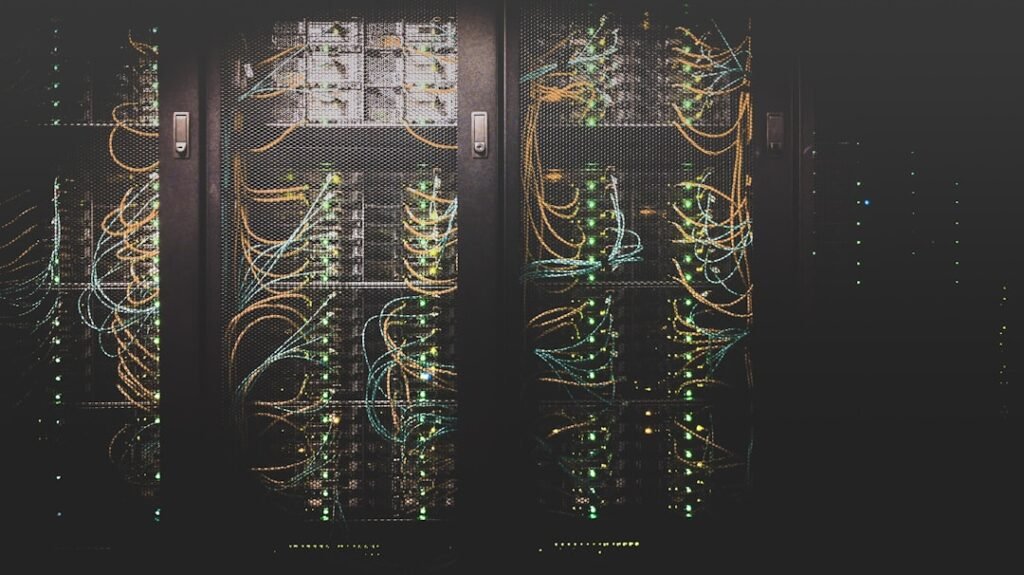
BDx Data Centers, a Singapore-headquartered data-center developer, broke ground on September 22, 2026, on a 640-megawatt AI campus in Jatiluhur, West Java, backed by 845 megavolt-amperes (MVA) of secured grid power from PT Perusahaan Listrik Negara (PLN), Indonesia’s state-owned electricity utility, according to PR Newswire and The Jakarta Post. That single campus is only part of a larger commitment: BDx now holds 1.2 gigawatts (GW) of contracted PLN power across its Indonesian sites, described by the company and PLN as the largest data-center power commitment ever secured by one operator in the country. Set against PLN’s own reported pipeline figures, that means one company has already claimed the majority of the national capacity Indonesia has lined up for the entire sector.
What did BDx just break ground on?
The new facility, internally designated CGK4 (“AI Campus 2”), sits in Jatiluhur, Purwakarta regency, and is planned to reach 640 MW over roughly three years, with buildings commissioned in sequence, according to PR Newswire’s September 22 release and Data Centre Magazine. The first building, a 120 MW phase using direct-to-chip liquid cooling to support densities up to 500 kilowatts per rack, is expected to begin operating in early 2027. The campus draws on 845 MVA of grid capacity PLN has already committed to it — part of a wider 1.2 GW portfolio BDx first disclosed on June 3, 2026, which also covers an expansion at its CGK3A campus in Cilandak, South Jakarta, and a new site, CGK5, in Suryacipta, West Java, according to Data Center Dynamics. BDx says the buildout is supported in part by a $320 million loan facility secured earlier in 2026.
How big is 1.2 gigawatts next to Indonesia’s actual pipeline?
PLN’s own Electricity Supply Business Plan (RUPTL) 2025–2034 projects national data-center electricity demand rising from roughly 1,098 MW in 2025 to about 2,122 MW in 2026 — nearly doubling in a single year — before reaching an estimated 5,226 MW by 2034, according to reporting by Bisnis Indonesia on September 7, 2026. The same report notes Indonesia’s current operational data-center capacity sits at only 44 percent of Singapore’s and 36 percent of Malaysia’s, even though the near-term pipeline is described as approaching 2 GW. Measured against that figure, BDx’s 1.2 GW commitment alone accounts for roughly six of every ten megawatts PLN has lined up for the sector nationally — before counting Digital Edge Indonesia, a separate operator that holds its own 2×725 MVA (roughly 1,450 MVA) PLN commitment for a campus in Cikarang, scaling through 2030, according to Antara News. Two named anchor tenants, in other words, are the pipeline.
Why is Jakarta promising unlimited power to everyone else at the same time?
On the same day BDx broke ground — September 22, 2026, at the Electricity Connect 2026 conference in Tangerang — Indonesia’s Minister of Energy and Mineral Resources, Bahlil Lahadalia, told prospective investors that grid capacity would not be a constraint on new data-center projects. “Once they communicate their needs and specify how much electricity capacity they require, PLN will definitely prepare it,” Bahlil said, according to Antara News and Tempo, pointing to Indonesia’s islands and renewable-energy potential as reasons the country could supply power more cheaply than its neighbors. Indonesia’s grid has genuine headroom to draw on: Java-Bali, which carries roughly 80 percent of national demand, ran a reserve margin as high as 44 percent in mid-2023 — well above the 24–35 percent regulators typically consider adequate, per PLN data cited by Kompas and IEEFA. That historical oversupply is the resource Bahlil is marketing. But the two anchor deals already on PLN’s books show that headroom is being allocated in concentrated, negotiated blocks to a small number of named foreign operators, not distributed as an open queue.
What does this mean for a building portfolio that isn’t a hyperscale anchor tenant?
An open invitation to “communicate your needs” is not the same commitment PLN has already made in writing to BDx and Digital Edge. Grid interconnection is a sequential, capacity-limited process even on a system with a comfortable aggregate reserve margin — new commercial or industrial connections in Cikarang, Karawang and greater Jabodetabek, the same clusters where BDx and Digital Edge sit, will be engineered and queued around the substation and transmission upgrades those anchor deals already require. An ASEAN portfolio manager or building owner planning a retrofit, an expansion, or a new interconnection in West Java should treat a minister’s open offer of power as a marketing statement, not a queue position, and should confirm substation-level headroom directly with PLN’s regional office before assuming national oversupply figures apply to a specific site. The same dynamic that let two operators absorb most of a national pipeline in under four months can just as easily leave a mid-sized commercial applicant waiting behind them.
Key takeaways
- BDx Data Centers broke ground on a 640 MW campus in West Java on September 22, 2026, backed by 845 MVA of PLN grid power as part of a wider 1.2 GW commitment across its Indonesian sites.
- That 1.2 GW figure alone represents roughly 60 percent of the nearly-2-GW near-term data-center power pipeline PLN has reported, with a second operator, Digital Edge Indonesia, holding a further 1,450 MVA commitment.
- Indonesia’s Java-Bali grid has run reserve margins as high as 44 percent in recent years, meaning the capacity being allocated to anchor tenants is not a response to scarcity but a deliberate concentration of available headroom.
- Indonesia’s energy minister publicly promised unconstrained power access to any data-center investor on the same day the BDx groundbreaking was announced, a marketing pledge that does not carry the same weight as PLN’s existing contracted commitments.
- Building owners and portfolio managers planning new interconnections in West Java’s data-center clusters should verify substation-level capacity directly with PLN rather than relying on national reserve-margin statistics or ministerial assurances.