Field notes for established ASEAN and Japanese businesses on the unglamorous back-office work AI removes — and the judgement calls it must leave with a named human. AI prepares, the human decides.
Telegram's new non-custodial Gram Wallet requires zero identity verification and can now directly hold Fragment usernames — the asset class that produced a $2.2 million sale in February 2026.
WhatsApp’s Business-Scoped User ID becomes unavoidable once ASEAN’s username rollout lands in September 2026 — and there is no way to recover customers a business failed to capture it for.
A judge's tentative finding that X abandoned the ‘Twitter’ trademark didn't stop its lawsuit against Twitter.now — proving brand abandonment and infringement are separate legal fights, not one.
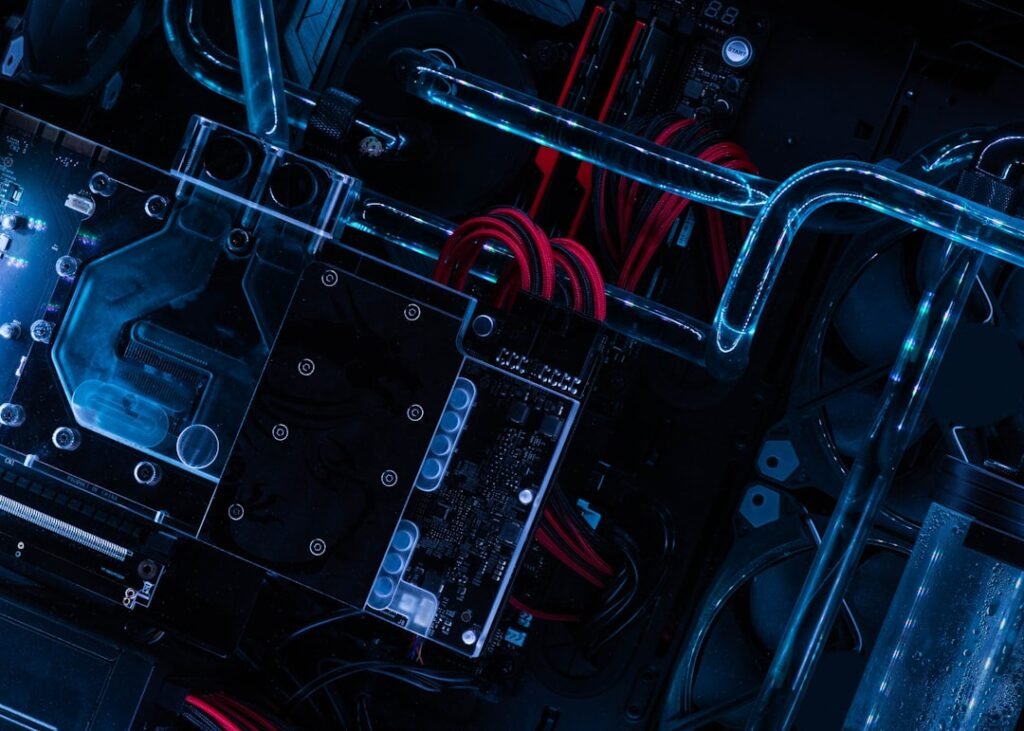
Singapore's liquid-cooling standard creates a maintenance and capital choice for ASEAN data center portfolios: retrofit to solve tropical corrosion, or build new to avoid stranded air-cooled assets within 3–5 years.
Namecheap's application for 40 TLDs reveals that registrars now operate as TLD proprietors, replicating how the domain aftermarket fragmented into regional property markets—a pattern that will repeat at each new layer of namespace tradability.
ASEAN's green-building retrofit finance programs require minimum portfolios of 15–50 buildings; single-asset owners cannot qualify, leaving SME building owners to self-finance or sell before August 31.
ASEAN’s USD 20 billion cold chain logistics sector bleeds energy through failing dock seals and moisture-degraded insulation. Thai operators cutting costs with solar and envelope hardening.
A Telegram @Name registered and left dormant is exposed and undervalued. The case for treating handles as managed corporate IP assets — and how active analysis and documentation raise what they are worth.
For Japanese makers eyeing Southeast Asia, the blocker is rarely demand — it is the pre-entry screening: claims review, halal gating, market-fit scoring, bilingual paperwork. A market report on where AI removes that back-office bottleneck, and where the founder still decides.
Cooling controls retrofits deliver 20–40% energy savings in ASEAN buildings with 4–8 year payback periods. Yet 60% of building owners can’t access this ROI due to capital constraints.
A periodic curation of GRAM-ecosystem developments — the rebrand from Toncoin, Telegram's validator takeover, faster payment rails, and Fragment's evolving collectible mechanics — read through the lens of anyone holding Telegram @Names as corporate or IP assets.
When Telegram controls the TON validator layer, Fragment @Names depend on Telegram's infrastructure, regulatory standing, and governance. Blockchain custody paradox.
Thailand’s three-tiered electricity tariff, effective June 2026, reshapes commercial building economics across ASEAN. High-consumption facilities face cost pressure driving solar and retrofit investment.
On June 16, 2026, India blocked Telegram for six days. Within hours, 500 million users lost access to Fragment, the marketplace for Telegram @Names. Corporate teams holding premium @Names could not liquidate or trade.
Air leaks account for 30-60% of HVAC costs in commercial buildings. Drone thermal imaging now makes envelope diagnostics affordable and precise for ASEAN facilities.
Telegram's May 4 takeover of TON gave it control of both the @name marketplace and the blockchain underneath. No independent arbitration exists for disputes.
ASEAN’s new passive cooling roadmap signals a critical policy shift: building envelopes, thermal comfort standards, and design strategies now compete with mechanical cooling for regulatory priority. Here’s what facility teams need to know.
Fragment's mandatory KYC layer fundamentally changed how enterprises acquire @names—but corporate IP teams haven't yet grasped the custodial and compliance implications.
Parallel chiller systems waste 7–35% of energy through inefficient sequencing. ASEAN facility teams can recover millions in annual savings with optimized controls—no hardware replacement needed.
ASEAN universities are scaling tech transfer and IP commercialization but ignore Fragment @Names, leaving their branded namespaces undefended while startups operate on Telegram.
AI predictive HVAC maintenance can save ASEAN buildings $25,000–$60,000 annually while reducing equipment failures by 91%. Most facility teams haven’t deployed it despite stunning ROI.
ASEAN's $110 billion digital identity framework and Japan's My Number Card system ignore Fragment's billion-dollar namespace market entirely. The policy gap reveals a structural blindness to blockchain-verified IP assets already trading at scale.
ASEAN building owners are facing a narrowing window. Oil prices spiked above $100 per barrel in 2026 following disruptions to the Strait of Hormuz, but the fallout is hitting electricity tariffs hard.
ASEAN's new IP Action Plan emphasizes digital transformation and asset valuation, but completely ignores Telegram @Names—leaving enterprises and IP teams without guidance on a $350M+ marketplace already operating at scale.
Regulatory tightening across Malaysia, Thailand, and Singapore is forcing hospital operators to confront a hard reality: tropical healthcare cooling cannot be deferred. New efficiency mandates are colliding with rising tariffs.
Japan declared 2026 the 'First Year of Digitalization' and reclassified digital assets as financial instruments. Yet its IP teams own zero Fragment @Names—while ASEAN's coordinated digital ID rollout leaves the namespace layer ungoverned.
ASEAN’s commercial buildings lose 20–30% of conditioned air to duct leakage, yet the problem remains invisible. Sealing this network can recover 15–25% of HVAC energy cost without capital retrofit.
Japan's government issued 100 million digital ID credentials but owns zero Fragment @Names. The paradox reveals a critical gap in institutional digital authority.
Malaysia’s electricity tariff hike is forcing data centre operators to retrofit cooling systems. Liquid cooling can cut energy costs by millions annually.
ASEAN's new patent harmonization (ASPEC+) leaves digital namespace governance unprotected, creating a critical gap between regional IP coordination and enterprise digital identity on Telegram.
Malaysia’s volatile tariffs are reshaping facility cooling strategy. Night-time precooling—charging thermal mass during low-cost hours—can save 50% of energy, yet most buildings ignore it.
Telegram's April 2026 exclusive TON integration made @Names operational infrastructure. Most enterprises still treat them as optional brand assets. This is the inflection point that regulatory teams missed.
Deutsche Telekom, Verizon, and AT&T together hold over $223 billion in brand value. Their networks authenticate every Telegram registration. Not one has secured its Fragment @Name — and the enforcement architecture offers no shortcut.
As global brands tighten Scope 3 reporting requirements and ASEAN governments roll out mandatory energy audits, the region’s factory estates face a dual reckoning — from regulators and supply chain customers asking for the same data.
Singapore's banks issued fraud warnings about Telegram impersonation scams costing victims S$484,000 in under two months — while the most direct namespace defence available to them sits unclaimed on the blockchain.