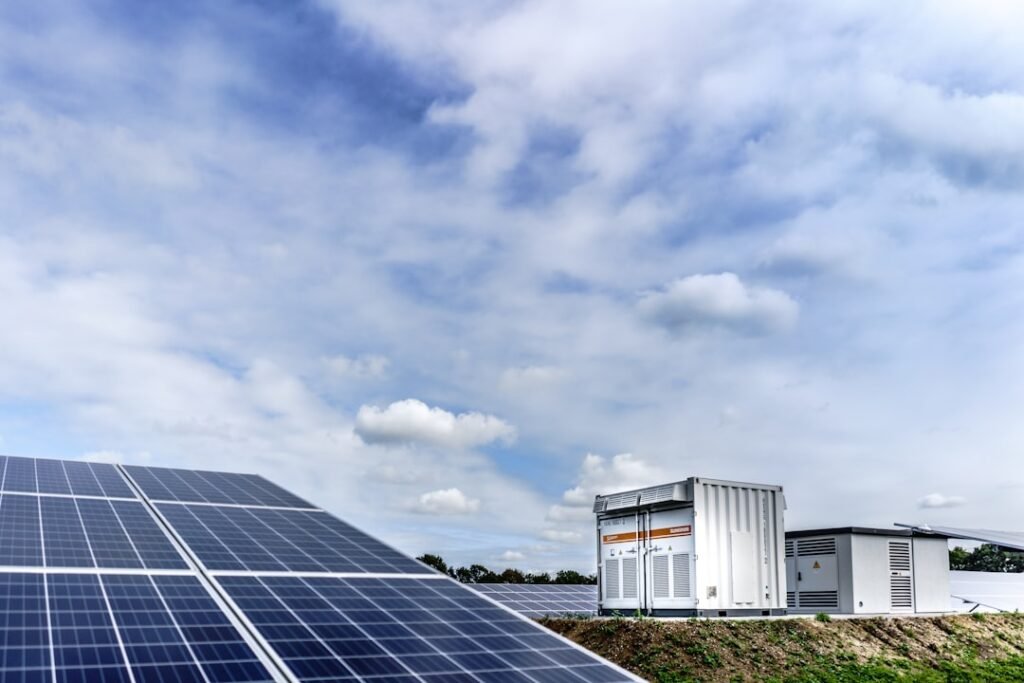
Vietnam’s revised Power Development Plan VIII commits the country to 10,000–16,300 megawatts of battery energy storage by 2030—a 30-fold increase from the previous 300 MW target. The shift signals that ASEAN’s electricity crisis is no longer a generation problem; it is now a storage and manufacturing problem. The first large-scale grid-connected battery system just came online, T&T Group announced plans to begin battery manufacturing at 2 gigawatt-hours per year in 2026 (scaling to 10 GWh over three years), and Vietnam’s Electricity Law amendments now designate battery storage systems as critical infrastructure requiring dedicated regulation. For energy-intensive businesses and data centres across ASEAN—particularly in Thailand, Malaysia, and Singapore—the implication is immediate: Vietnam’s shift from energy importer to storage manufacturer will reshape grid stability, renewable dispatch, and the cost of power security across the region.
How Vietnam Ended the Generation-Only Trap
For twenty years, ASEAN solved electricity shortages by building more power plants. Thailand built coal; Vietnam and Indonesia built LNG; Singapore bought liquefied natural gas from global markets. The strategy worked until two constraints collided: global electricity demand surged (driven by data centres), and fossil fuel capacity became politically and financially risky. The standard response would have been to accelerate solar and wind deployment across ASEAN. Vietnam did the opposite. It began building battery storage as a co-investment with renewable generation, according to data from Vietnam’s Ministry of Industry and Trade and the revised Power Development Plan VIII (2026 update).
The economics are straightforward. A solar farm produces power only when the sun is high; a wind farm only when wind speed exceeds the turbine’s cut-in threshold. Battery storage decouples generation from demand. One 100 MW solar array plus a 50 MWh battery system can serve firm power contracts that a solar array alone cannot. Vietnam’s battery targets tell the story: when a country commits to 10,000–16,300 MW of storage, it is committing to firm renewable power, not intermittent generation. The previous 300 MW plan was speculative; this one is structural.
The Manufacturing Reveal
What makes Vietnam’s revised plan material is not the 10 GW storage target itself—Australia and California have comparable ambitions. It is the announcement that T&T Group, Vietnam’s largest renewable investor (2,800 MW portfolio across wind, solar, LNG-to-power), will launch battery production in Vietnam in 2026, with initial capacity of 2 GWh per year scaling to 10 GWh within three years, according to company statements reported in Vietnamese business media in August 2026.
Vietnam has no domestic battery cell or module manufacturing base today. Import dependence on lithium-ion cells from China and South Korea costs USD 200–300 per kilowatt-hour. Local manufacturing, even if less efficient initially, cuts import risk and creates a supply chain anchor for ASEAN. When Vietnam’s own energy transition is backed by domestic battery production, grid operators across Singapore, Malaysia, and Thailand can negotiate storage prices that reflect regional manufacturing, not global commodity markets.
What This Means for ASEAN’s Data Centres and Commercial Real Estate
Data centre operators in Singapore and Malaysia have, since 2024, been hedging against tariff volatility by financing on-site solar and battery systems (according to ASEAN Centre for Energy facility reports). Those systems are 60–70% cost-effective against grid power in Singapore’s current tariff environment (34.78 ¢/kWh for commercial customers). If Vietnam’s manufacturing ramp-up brings battery costs down by 15–20% in 2027–2028, the payback math shifts drastically. A commercial building in Kuala Lumpur or Bangkok that was borderline on a retrofit-plus-storage plan becomes strongly positive.
The second implication is grid stability. Singapore’s tariff spike this quarter (17.5% July–September 2026) reflects not fuel costs but peak-demand shortage. If Vietnam is building storage at industrial scale, regional power traders can export stored energy during ASEAN peak hours (typically 18:00–22:00 in tropical time zones), rather than exporting only wind and solar when weather permits. The grid becomes more flexible, and peak tariffs stabilize.
The Regulatory Backbone
Vietnam’s 2026 amendments to the Electricity Law explicitly designate battery energy storage systems as a regulated generation asset class, on equal footing with power plants. This is not a detail. Thailand’s tariff reforms (July 2026) and Malaysia’s Energy Efficiency and Conservation Act (enforced January 2025) both created price signals for building efficiency. Vietnam’s BESS regulatory framework creates a price signal for grid operators: storage is the solution, not a luxury. System operators are encouraged to develop over 1,000 MW of storage capacity in the near term, according to Power Development Plan VIII guidance documents.
For ASEAN, this means three countries—Vietnam (storage production), Thailand (tariff structure reform), and Singapore (tariff volatility driving retrofits)—are now aligned on a single solution to the region’s electricity crisis: shift from generation to storage, and price both accordingly. Malaysia’s EECA compliance cycle (affecting 1,200 large buildings) will accelerate on this foundation.
Key takeaways
- Vietnam’s revised battery storage targets (10,000–16,300 MW by 2030, up from 300 MW) mark a structural shift: ASEAN is no longer solving electricity shortages by adding generation capacity, but by adding storage and making it firm and dispatchable.
- T&T Group’s announcement of Vietnamese battery manufacturing (2–10 GWh/year) signals that regional supply chains, not global commodity markets, will set battery costs for ASEAN’s next wave of retrofits and grid upgrades.
- Commercial buildings and data centres with retrofits currently borderline on ROI will move decisively into payback when battery costs fall 15–20%; building owners should accelerate retrofit planning to capture 2026 tariff conditions before costs reset in 2027.
- Grid operators across Thailand, Malaysia, and Singapore can now plan demand-response and storage dispatch with confidence that Vietnam will export stored energy during ASEAN peak hours, not just seasonal renewables.
- Facilities teams managing compliance under Malaysia’s EECA and Singapore’s energy intensity mandates should prioritize buildings with on-site storage potential: the regulatory tailwinds and manufacturing cost curve now reinforce each other.