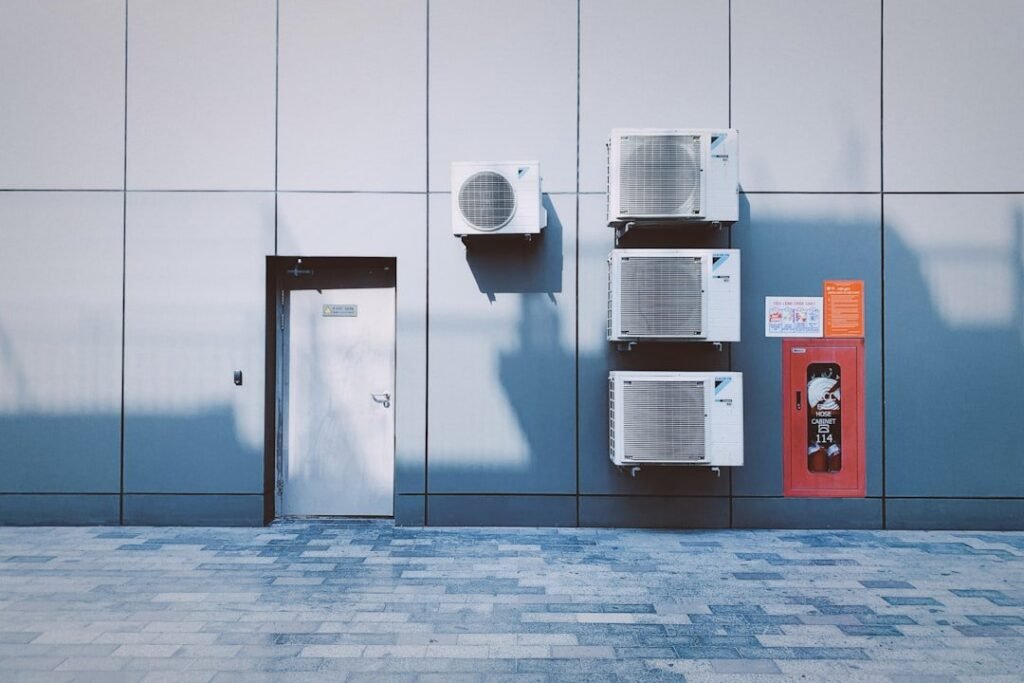
The Peak Hour Penalty: Why ASEAN Building Managers Are Automating HVAC to Escape Time-of-Use Tariff Shock
Malaysia’s Tenaga Nasional Berhad (TNB) has restructured its tariff around maximum demand (MD) charges, penalizing the highest 30-minute consumption spike in each billing cycle. Thailand’s factory tariffs now separate on-peak (09:00–22:00 weekdays) from off-peak periods, with demand charges running 74.14 THB/kW-month. Singapore’s commercial rates, already the ASEAN region’s highest at USD 0.269/kWh, continue to climb. For facility managers running large chillers during peak hours, the math is unforgiving: one 500 kW chiller spike at 14:00 on a Monday locks in a month-long demand charge regardless of whether it runs again.
Cooling is the culprit. The International Energy Agency projects that by 2040, air conditioning will account for nearly 30% of ASEAN’s peak electricity demand, up from approximately 10% in 2017. That shift means the region needs roughly 150 GW of additional generation capacity to support peak periods. Utilities are responding by sharpening tariffs. Building owners are responding by automating.
From Manual Tuning to Algorithmic Control
Building Automation Systems (BAS) are no longer optional engineering extras—they are tariff arbitrage tools. A comprehensive BAS can deliver 10–30% total energy savings across a building, with HVAC-specific optimizations cutting heating and cooling consumption by 20–40%. Those numbers shift when demand charges apply: every kilowatt avoided during the peak 30-minute window pays for itself faster than the same kilowatt saved during off-peak hours.
The mechanism is straightforward. Variable Frequency Drives (VFDs) on HVAC fans and pumps modulate motor speed to match load, rather than running at full throttle. A typical VFD operates at 97% efficiency when fully loaded, and by scaling output to demand, VFD-controlled motors can increase overall efficiency by up to 50%, with power savings reaching 40–80% in chiller applications. Integrated BAS platforms layer this with real-time demand forecasting: if a chiller load prediction hits the threshold that would trigger a demand charge spike, the system pre-cools thermal mass, shifts non-critical loads, or delays operations to off-peak windows—all without sacrificing indoor comfort or tenant operations.
Singapore’s Green Mark certification now mandates integrated building performance monitoring, compressing the competitive timeline for commercial buildings. Malaysia’s energy codes, aligned with the national sustainable development agenda, are accelerating the same pressure. The result is a compression of the traditional 10-year HVAC equipment replacement cycle into a 5-year automation deployment window. Facility teams that wait for hardware refresh cycles are leaving tariff savings on the table.
Market Reality: From Niche to Standard
The Southeast Asia Building Management Systems market valued at USD 1.8 billion in 2026 is projected to expand to USD 4.76 billion by 2035, growing at an 11.4% compound annual rate. That expansion is not speculative; it is driven by regulatory compliance deadlines and tariff pressure. Vietnam’s manufacturing parks are bundling cloud-based energy management systems into industrial lease agreements. Thailand’s large commercial operators are retrofitting chiller plants with demand-side orchestration to lower peak draw. Malaysia’s growing portfolio of time-of-use tariffs is forcing facility teams to shift high-load operations earlier or later in the business day.
The financial logic is simple. A 500 kW reduction in peak demand during a critical 30-minute window can save a building USD 500–1,000 per month on demand charges alone (depending on tariff). A mid-sized office tower (50,000 m²) with VFD-controlled HVAC can realistically cut peak demand by 100–200 kW for the cost of USD 200,000–400,000 in controls and drives, paying for itself in 18–36 months. After payback, the savings accrue directly to the bottom line.
Beyond Hardware: Operations Matter
Equipment alone is not enough. The Southeast Asia BAS market is not just growing; it is consolidating around platforms that integrate HVAC, lighting, and occupancy sensors into a unified control fabric. Proper commissioning—a step many buildings skip—can unlock another 10–15% of the theoretical savings. Ongoing performance verification, trending, and adaptive tuning separate buildings that reach the 20–40% HVAC savings potential from those that plateau at 5–10%.
Facility teams that treat BAS as a one-time installation cost are competing against those that treat it as an operational asset. As tariff structures tighten and peak-hour penalties sharpen, the margin between these two strategies widens.
The Timing Window
The ASEAN Plan of Action for Energy Cooperation (APAEC) 2026–2030 targets a 30% renewable energy share in total primary energy supply by 2030 and a 45% share in installed power capacity. Higher renewable penetration will increase grid volatility and peak-demand management pressure. Building-side demand response—coordinated by intelligent BAS—is emerging as a critical piece of ASEAN’s system flexibility puzzle. Utilities in Thailand, Malaysia, and Singapore are beginning to offer financial incentives for buildings that can curtail peak demand when the grid is stressed. Those incentives will sharpen as renewable capacity grows and peak periods become more pronounced.
For building owners and facility managers, the message is clear: tariff structures are locking peak demand penalties into commercial property economics. Cooling is the largest single source of peak demand. Automating HVAC to flatten peak draw is no longer a 10-year capital project; it is a 3–5 year tariff arbitrage opportunity with measurable payback. Buildings that move now can lock in energy savings before new energy codes compress deployment timelines further.
The conversation is shifting from “Should we automate HVAC?” to “How quickly can we deploy?” For facilities teams across ASEAN facing climbing electricity bills, that shift marks a fundamental change in how building energy strategy is written. Connect with us at technicityip.com to discuss how your portfolio can turn peak demand pressure into a competitive advantage.