The Lighting Paradox: Why ASEAN Buildings Keep Paying 8.7x More Than They Should
In the race to cut building operating costs, ASEAN facility managers have fixated on the obvious villains: chillers, compressors, thermal leakage. But one of the largest, cheapest-to-fix energy drains remains almost invisible—and it’s been sitting above your head the entire time. Lighting, which accounts for 15–25% of commercial building energy consumption across Southeast Asia, has become a paradox: the technology to slash costs by nearly 9x already exists, yet most buildings haven’t adopted it.
A 2022 analysis published in Scientific Reports quantified the opportunity: a comprehensive LED lighting retrofit across commercial buildings in Southeast Asia could reduce lighting energy consumption by 6.7 times, cut associated CO₂ emissions by 8 times, and slash electricity costs by 8.7 times by 2050. That’s not aspirational; it’s the difference between incumbent fluorescent and halogen systems and modern LED arrays—a transition that has already begun, but adoption remains inconsistent.
The Adoption Reality: Growth That Masks Gaps
The ASEAN LED lighting market is moving fast. LED sales shares across Southeast Asian markets have reached 50–85% penetration in different countries, and market forecasts project the regional LED lighting products market will grow substantially through 2035. On the surface, this looks like a success story. But the gap between new construction and existing building retrofits is the real problem.
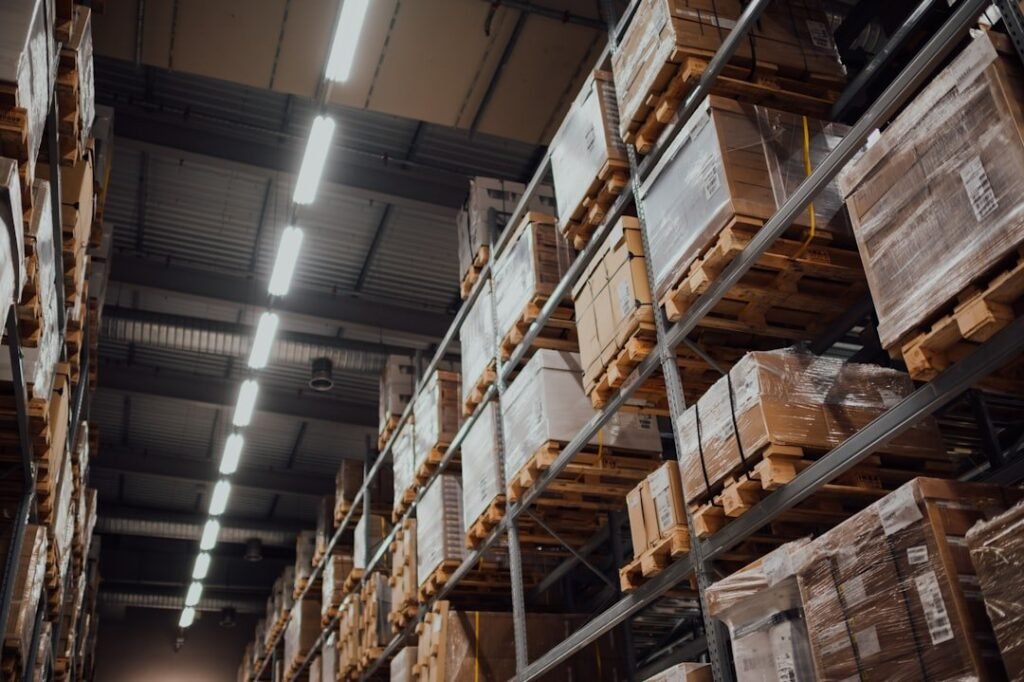
LEDs are now standard in new buildings because capital cost barriers have collapsed. The real opportunity—and the real challenge—sits in the tens of thousands of commercial, warehouse, healthcare, and office facilities already operating across Kuala Lumpur, Bangkok, Jakarta, and Singapore. These buildings are running 30-year-old T8 fluorescent grids, metal halides in warehouse bays, and poorly zoned lighting systems that run full-bore even during daylight or when spaces are empty.
Retrofits face a deceptively mundane barrier: execution complexity. Ceiling access in cramped mechanical floors, rewiring during occupied operations, coordination with HVAC systems, and fixture compatibility create project friction that spreadsheet analyses don’t capture. A 10-storey office tower may have 40,000 light fixtures; a regional distribution warehouse might have 20,000 high-bay units. The energy ROI is real, but the operational friction is genuine.
The Tariff Pressure: When Rising Costs Force Action
Rising electricity tariffs across ASEAN have begun breaking the inertia. Malaysia, Thailand, and Singapore have all raised power tariffs in recent years—partly due to fuel and LNG costs, partly due to grid infrastructure pressure. For facility managers operating 24/7 warehouses, hospitals, or data centres, lighting—especially in high-bay spaces—has become a line-item target.
But individual LED bulb-by-bulb swaps miss the economics. A strategic retrofit paired with controls integration can yield something far more valuable than 8.7x static cost reduction: dynamic energy management.
The Hidden Lever: Occupancy and Daylight Integration
Lighting retrofits today are rarely solo projects. When paired with building management systems (BMS) or standalone occupancy sensors and daylight harvesting controls, the value multiplier grows. An LED tube that burns at half intensity in unoccupied conference rooms, or dims when exterior daylight is sufficient, produces savings far beyond the bulb upgrade alone.
The ASEAN smart building market is projected to grow from $79 billion in 2021 to $166.6 billion by 2028—partly driven by exactly this kind of integrated efficiency play. Building automation systems can now orchestrate lighting, HVAC, and occupancy in a single digital layer, with AI-powered baselines identifying anomalies (failed occupancy sensors, missed maintenance, zones left on permanently).
A 2026 analysis of digitalized buildings in ASEAN found that BMS-integrated lighting control across large portfolios can yield return on investment within two years. For hospital wings running 24/7, warehouse distribution hubs with variable occupancy, or office floors with hybrid work patterns, that payback window is compelling.
The Portfolio Shortfall
Large-scale building owners—logistics REITs, healthcare networks, multinational office operators—have begun treating lighting retrofits as portfolio-level decisions rather than single-building projects. Standardizing on a single LED platform, negotiating bulk warranties, and deploying BMS pilots across a subset of sites reduces per-building friction. Yet even among institutional investors, adoption remains patchy.
The barrier is not technical. It’s not even cost; an 8-year payback on a lighting retrofit is competitive with most other building efficiency investments. The barrier is structural: lighting retrofits don’t fit neatly into capital budgets (they’re maintenance), energy budgets (which lack authority over capex), or sustainability mandates (which focus on grid-scale renewables or chiller upgrades).
The Regulatory Nudge
ASEAN’s Roadmap for Energy-Efficient Buildings targets a 40% reduction in regional energy intensity by 2030 relative to 2005 levels. ESG disclosure mandates, particularly in Thailand and Singapore, are beginning to force building owners to publish energy consumption breakdowns—creating reputational pressure to address the low-hanging fruit. Lighting efficiency is the definition of low-hanging: proven technology, rapid deployment, predictable ROI, immediate and visible impact.
The paradox, then, is not that the solution doesn’t exist. It’s that ASEAN building portfolios remain optimized for the past decade’s priorities: thermal envelope, chiller sequencing, and tariff arbitrage. Lighting retrofit economics have changed the equation. The technology has matured. The controls are ready. The tariff pressure is rising. The only variable left is execution friction—and that’s a choice, not a constraint.
For building owners and operators wrestling with energy budgets, the question is no longer whether to retrofit. It’s whether the retrofit will be piecemeal and slow, or coordinated and strategic. If you’re managing a regional building portfolio and haven’t systematized your lighting retrofit roadmap, you’re likely paying more than $0.10/kWh for lighting energy that could cost you $0.01/kWh. That gap compounds quickly.
Energy intelligence is emerging as a competitive advantage in ASEAN real estate. If you’d like to explore how to quantify your portfolio’s lighting opportunity, we’d welcome a conversation.