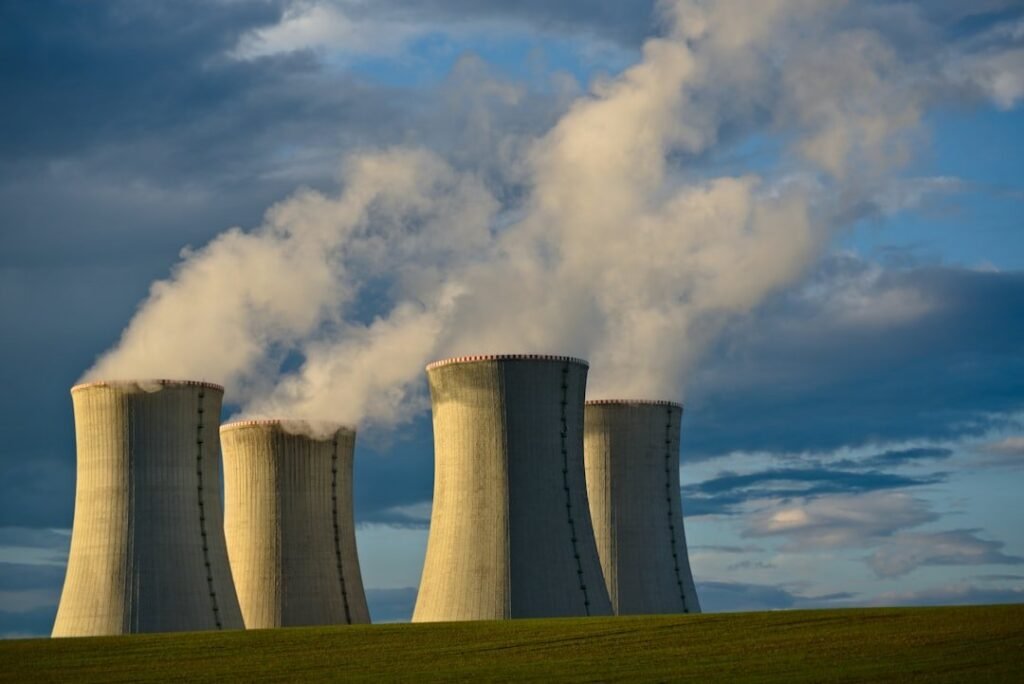
The Cooling Tower Blind Spot: Why ASEAN Buildings Are Hemorrhaging Water—And Missing a Quick Win
A 200-tonne cooling tower in a Singapore shopping mall or Jakarta office tower circulates roughly 900,000 cubic metres of water annually. Between 250,000 and 360,000 cubic metres of that water never returns to the chiller. It evaporates. At Singapore’s industrial tariff of $2.40 per cubic metre, that’s a $600,000 to $864,000 annual loss—before considering treatment, blowdown disposal, and makeup pump energy.
Yet the water loss remains nearly invisible to most ASEAN facility teams. It’s not a pipe break, not a meter on the maintenance dashboard, and not a line item most building managers think to audit. Cooling towers operate behind roof access barriers or in mechanical yards, and their water waste compounds annually in a way that escalates costs across the portfolio.
Why Tropical ASEAN Buildings Lose More
Evaporative loss in a cooling tower is a thermodynamic fact. In ASEAN’s tropical heat—ambient temperatures of 32-35°C and humidity of 60-80%—the efficiency gap is smaller, but the absolute loss is higher. A well-maintained cooling tower in a temperate climate might lose 2-3% of circulating water to evaporation per cycle. ASEAN towers lose 3-5% per cycle, and most towers run 4-6 cycles daily. The region’s humidity also affects makeup water quality, requiring higher treatment costs and more frequent blowdown cycles to control mineral concentration.
Water costs vary sharply across ASEAN: Singapore at $2.40/m³ (industrial), Malaysia between $0.50 and $1.50/m³ depending on state and season, Thailand around $0.30–0.80/m³. But the principle is the same everywhere—invisible evaporative loss is compounding into a portfolio-scale cost that no one monitors because no one can see it.
The Waste Multiplier: Treatment, Energy, and Disposal
Raw water loss is only part of the damage. To keep the cooling tower circuit clean, facility teams add chemicals—corrosion inhibitors, biocides, scale preventatives. That water leaves the system every cycle. Makeup water must be filtered and treated before entering the circuit. The pumps that circulate and replenish that water consume electricity—during peak hours, when tariffs are highest.
A 200-tonne tower with a 3-metre-per-second flow rate and five cycles of concentration (a typical setting in ASEAN) blows down roughly 15,000 cubic metres annually—wastewater that requires disposal compliance. Over a 10-tower portfolio in a single REIT or facilities operator, you’re looking at 250,000–350,000 cubic metres of treated wastewater annually, plus 500,000–700,000 cubic metres of makeup water, pumped, filtered, and heated in most cases.
Why Real-Time Visibility Changes the Equation
Until recently, optimizing this cycle required manual water-quality testing (weekly or monthly) and guesswork on blowdown frequency. IoT sensors now sit inline on cooling tower returns and makeup lines, reporting conductivity, flow, temperature, and cycles of concentration in real time. Machine learning algorithms detect drift in water chemistry before mineral fouling damages the heat exchanger—and optimize blowdown timing to the hour.
The result: cycle-of-concentration can be pushed from 3–5 cycles to 6–8 cycles (or higher) safely, cutting makeup water demand by 40–50%. In a Singapore context, that’s $120,000–$180,000 annual savings on water alone for a mid-sized building. A 50-building portfolio across Singapore, Malaysia, and Thailand sees a swing from $2–3 million in annual losses to $1–1.5 million—and that assumes no further optimization of fan speed, night setback, or load-responsive blowdown.
The Gap: Adoption Is Still Sparse
Despite the ROI, most ASEAN buildings still rely on quarterly or annual cooling-tower water audits, if they do them at all. The reasons are familiar: capital cost of sensors (~$15,000–25,000 per tower), integration with aging building management systems, and the fact that nobody’s bonus is tied to water waste in tropical regions where it’s historically been abundant and cheap.
But water stress is rising. Malaysia has implemented seasonal restrictions; Singapore’s tariffs have climbed every two years. Thailand’s industrial water tariff is projected to increase by 8–12% annually as Bangkok confronts subsidence and aquifer depletion. And ESG disclosure mandates now require facility teams to report water consumption—turning an operational blind spot into a material metric.
The practical angle: a facility manager can pilot one tower, measure the savings in 12 weeks, and roll out across the portfolio with a payback of 18–24 months. The technology exists. The data is real. The gap is just visibility.
For a deeper look at where your cooling tower water is going and what to do about it, connect with the team at technicityip.com.