The Numbers Tell a Clear Story
Singapore’s sustainable bond issuances jumped 80% year-over-year in 2024 to S$13.3 billion, according to Singapore’s Economic Development Board. In January 2025 alone, the Housing and Development Board (HDB) issued S$950 million in 5-year green notes at 3.12% per annum, while GuocoLand secured S$1.135 billion in green facility financing for the Guoco Midtown mixed-use tower—the largest green facility the developer has arranged to date. This is not niche capital; this is the mainstream.
The throughput is accelerating because the regulatory groundwork changed. In January 2025, Singapore updated its Green Bond Framework to align with the Singapore-Asia Taxonomy for Sustainable Finance (a classification system spanning energy, industrial, construction, real estate, and waste). The Monetary Authority of Singapore (MAS) extended its Sustainable Bond Grant Scheme (up to S$125,000 per issuance) through December 2028. The Singapore Exchange now accredits green, social, and sustainability fixed income securities directly, removing friction from the listing process. Combined, these moves have made green capital the path of least resistance.
Why Property Owners Are Moving Faster Than Policy
The pull is financial, not philanthropic. A corporate property owner or REIT today faces a choice: tap conventional debt at a rate that reflects no efficiency premium, or issue a green bond, tap MAS grants, and access a larger pool of ESG-mandated institutional investors. The green bond still requires third-party verification (BCA Green Mark certification, for example), but the economics have flipped. GuocoLand’s Guoco Midtown project carries Green Mark Platinum and attracted dual-lender support from DBS and OCBC. CapitaLand Integrated Commercial Trust’s Raffles City Singapore earned BCA Green Mark Platinum in March 2025, unlocking access to green financing frameworks already in place at the major REITs.
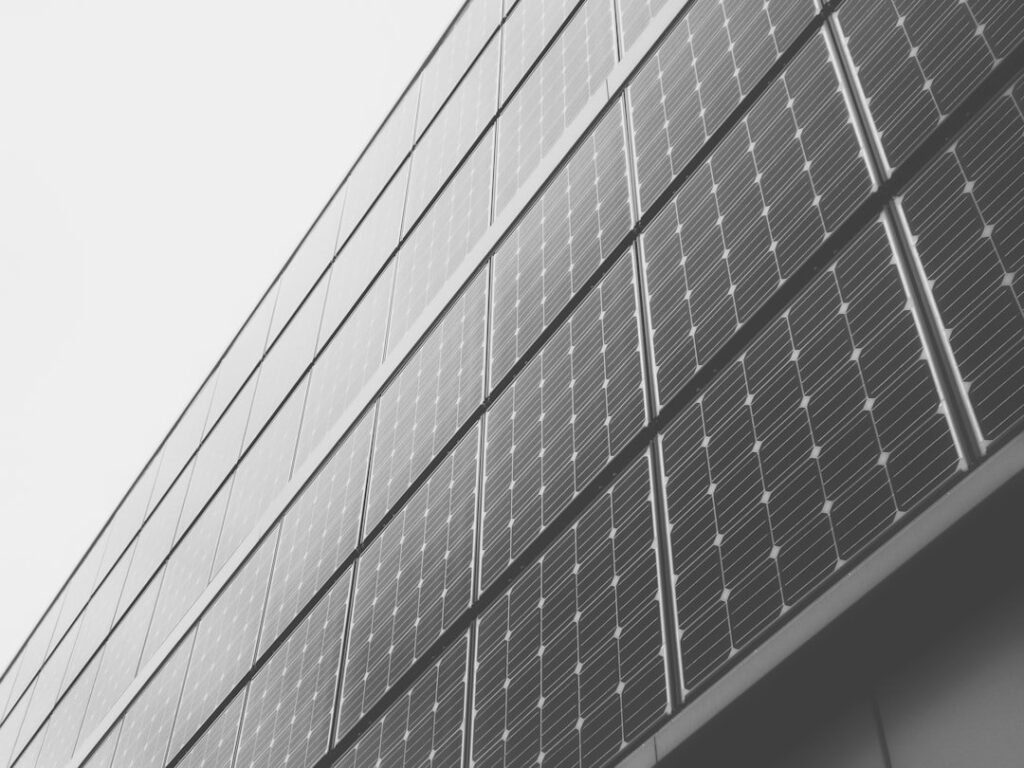
This is the envelope story playing out in capital markets. A building that retrofits its facade, mechanical systems, and BMS (building management system) to cut energy use by 30% doesn’t simply lower operating costs; it becomes fundable at better rates. For a 20-year commercial lease, that 50 basis point improvement in financing costs compounds into millions of dollars in owner wealth. ASEAN building owners in Kuala Lumpur, Bangkok, and Jakarta are watching this: Singapore’s green financing surge is proving that efficiency retrofits now have a quantifiable balance-sheet return beyond operational savings.
What Singapore’s Model Tells the Region
Singapore has built three layers of support that other ASEAN states are now replicating or considering. First, taxonomy and standards: the Singapore-Asia Taxonomy classifies which building activities (envelope upgrades, chiller replacement, controls) count as green and which remain amber (transition) or red (ineligible). Second, liquidity: by extending the MAS Sustainable Bond Grant Scheme and SGX listing support, the government reduced the cost and time to market for green issuances. Third, disclosure: mandatory climate reporting via TCFD (Task Force on Climate-related Financial Disclosures) alignment from January 2025 forward creates buyer confidence and demand from institutional investors who must themselves meet ESG mandates.
Regional development banks—the Asian Development Bank (ADB) and World Bank—are now mobilizing capital through the ASEAN Power Grid Financing Initiative (USD 10 billion ADB commitment over 10 years) and building-specific technical assistance via the ASEAN-BUILT programme. But private capital in Singapore is already moving at scale. When HDB issues S$950 million at 3.12% for green building projects and books it immediately, the signal reaches KL and Bangkok: capital is now priced for efficiency.
The Retrofit Calculus Shifts
For a 50,000 sqm commercial tower in ASEAN, envelope retrofits (external wall repairs, window replacement, cool coatings) typically cost S$15–20 per sqm, or S$750,000–1 million total. Mechanical system upgrades (chiller replacement, VFD installation, demand-controlled ventilation) run S$50–80 per sqm, or S$2.5–4 million. On a standalone basis, payback is 8–15 years depending on existing tariffs and hours of operation.
But financing at 50 basis points cheaper over 10 years reshapes the math. A S$3.5 million retrofit financed at 2.6% instead of 3.1% saves approximately S$180,000 in interest alone—a 5% reduction in total retrofit cost. Operational savings (8–15% energy reduction) generate S$200,000–400,000 per year depending on tariff. Suddenly, a retrofit project breaks even in 3–5 years instead of 10+, and the owner captures 15+ years of margin thereafter. That difference is why CapitaLand, GuocoLand, and HDB are now front-loading green bond issuances: the financing tail is wagging the retrofit dog.
Timing Matters: ASEAN Tariffs and Grid Pressure Are Tightening
Singapore’s green financing surge is well-timed against regional electricity pressures. Malaysia’s utility Tenaga Nasional (TNB) has signalled tariff adjustments for 2025. Thailand faces peak cooling demand that has stressed grids during heat waves. Indonesia’s Ministry of Energy has discussed subsidy adjustments. In this environment, a commercial building that cuts peak demand by 25% through chiller efficiency and envelope work is no longer an optional cost—it’s insurance. And when you can finance that insurance at a 50 basis point discount, it becomes a no-brainer capital allocation decision.
Singapore’s data is still leading the region, but the mechanics are replicating faster now. Vietnam, Thailand, and Philippines are PEEB-ASEAN (Partnership for Energy Efficiency in Buildings) participants. Malaysia has enacted the Energy Efficiency and Conservation Act 2024. The ADB and World Bank’s financing pipelines are now explicit about green building eligibility. Singapore’s green bond flood is not an outlier—it’s a leading indicator of where ASEAN capital is flowing.
The Hard Economics
Sustainable bond issuances in Singapore grew 25.6% year-over-year through 2025, with real estate accounting for nearly half (45.7%) of corporate issuances in Q4 2025. HDB’s total outstanding green bonds reached S$8.455 billion as of March 31, 2025. Singapore’s public sector is targeting S$35 billion in green bonds by 2030—a 4x increase from current outstanding stock. If private issuers scale proportionally, the country could see S$60–70 billion in green financing annually within 18 months. That capital density will force building efficiency retrofit decisions across ASEAN as property owners who can’t access green financing face higher capital costs and lower valuations at exit.
For building owners, the retrofit decision is no longer “energy savings vs. upfront cost.” It is now “energy savings + financing advantage + market resale premium + tariff insurance.” Singapore’s bond market has crystallized that calculus. The next phase will be how quickly other ASEAN cities industrialize the taxonomies, ESG disclosure, and grant schemes to unlock the same capital velocity.
For operators and portfolio managers across the region looking for clarity on envelope efficiency, chiller replacement, or controls retrofits, the question is now: what is your building worth in a capital market that prices energy performance as a financial asset? Connect with us at technicityip.com to explore how your portfolio stacks up.