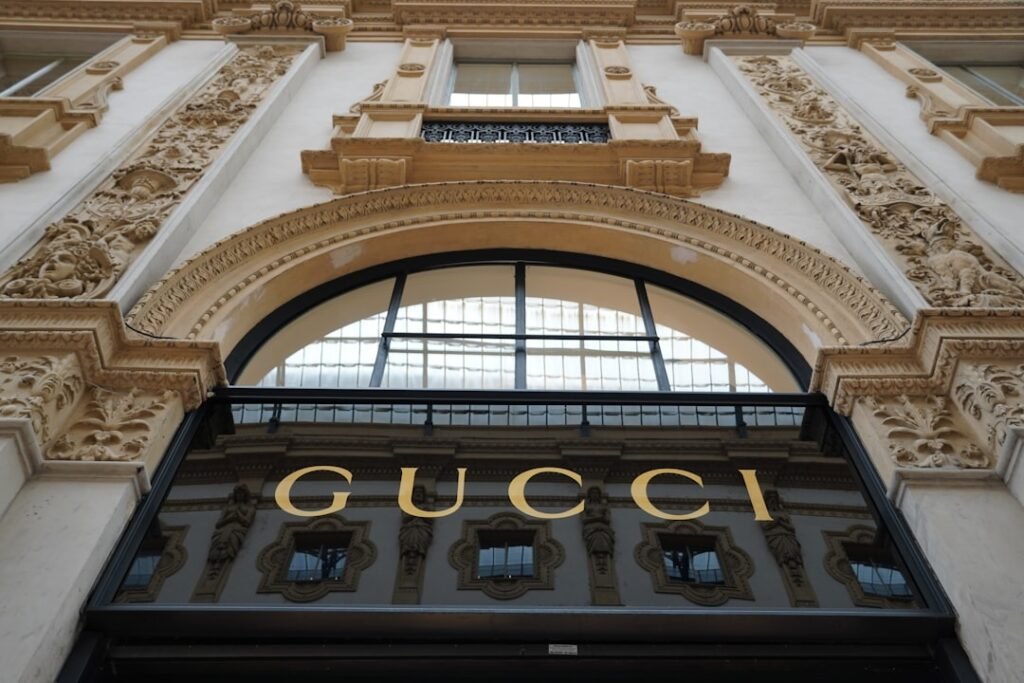
The luxury sector knows how to fight counterfeiting. LVMH’s anti-counterfeiting operation spans dozens of jurisdictions, files tens of thousands of enforcement actions annually, and co-founded the AURA Blockchain Consortium — alongside Prada, Cartier, Richemont, and Mercedes-Benz — to build blockchain-based product authentication infrastructure. In 2025, a US court ordered a single defendant to pay $584 million in damages to Louis Vuitton, one of the largest counterfeiting verdicts on record. France’s UNIFAB estimates that French luxury brands lose approximately 10% of annual turnover to counterfeiting. The enforcement machinery is formidable.
The same brands appear not to own their Fragment @names.
The $467 Billion Context
The OECD’s May 2025 Mapping Global Trade in Fakes report placed global trade in counterfeit and pirated goods at approximately USD 467 billion — roughly 2.3% of global imports. Luxury goods account for 60 to 70% of total counterfeit seizure values worldwide. Authentication firm Entrupy processed $3.7 billion worth of products in 2025, finding that 54.1% of scanned Louis Vuitton footwear and 42.5% of Dior items were counterfeit. Chanel, which overtook Louis Vuitton in Brand Finance’s 2025 luxury ranking, represented approximately $959 million in scanned counterfeit value in Entrupy’s dataset alone. The scale of the problem is not contested.
Where the Coordination Happens
The counterfeit luxury supply chain has migrated online, and Telegram is its operational hub. Research from Recorded Future documents the evolution of Chinese-language guarantee marketplaces on Telegram, where manufacturers, distributors, and individual sellers coordinate production, payment, and delivery. Brand intelligence firms CybelAngel and Corsearch name Telegram as the primary coordination platform for counterfeit networks active in 2025.
The evidence is visible without a subscription. Telegram channels operating under handles including @louisvuitton_replica and @HERMESreplica are indexed on public analytics platforms with thousands of subscribers. These channels do not merely sell counterfeits — they leverage brand identity directly in the Telegram namespace to attract buyers searching for the authentic brand. A mid-2025 TikTok campaign, in which content creators posing as Chinese manufacturers urged buyers to purchase direct, routed consumers to Telegram for transaction completion. The handle was the credibility signal.
Fragment as the Missing Piece
Fragment, Telegram’s official username auction marketplace on the TON blockchain, launched in October 2022 and processed over $50 million in sales within its first month. The platform’s trajectory since is instructive: the username @crypto, acquired for approximately $350,000 in 2023, received a $25 million acquisition offer by mid-2025. The username @news has sold for approximately $5.8 million. Brand-equivalent handles — including usernames corresponding to Chanel and Armani — have appeared in Fragment auctions, trading for tens of thousands of dollars, according to analysis published in the World Trademark Review.
The architecture of Fragment defines the IP problem. Each username is minted as a non-fungible token on the TON blockchain. Ownership is established by auction outcome, not brand affiliation. There is no UDRP equivalent, no pre-sale brand verification, and no dispute resolution mechanism. Once won at auction, the username NFT transfers permissionlessly — across wallets, across jurisdictions, potentially to anonymous holders — with no record linking ownership to any identifiable legal entity.
For luxury brands that have spent three decades mastering domain name recovery under UDRP and the US Anti-Cybersquatting Consumer Protection Act, this is a structurally different legal environment. A domain name can be seized through ICANN proceedings. A TON NFT cannot be compelled in the same manner.
The Blockchain Irony
LVMH, Prada, Cartier, and Richemont collectively founded the AURA Blockchain Consortium — a private, permissioned blockchain designed to authenticate luxury products from raw material to resale. The EU’s Digital Product Passport framework, expected to become mandatory between 2026 and 2030, is being actively piloted by Louis Vuitton and Dior. These brands understand blockchain permanence. They are building on-chain infrastructure to prove product provenance.
None of this investment addresses Fragment. AURA operates on a permissioned ledger controlled by its members. TON is a public blockchain where ownership follows auction outcome, not brand affiliation. The luxury houses that built product authentication on one blockchain appear not to have engaged with the naming layer that exists on another. The strategic incoherence is striking: a brand’s physical product can carry a blockchain certificate of authenticity, while the brand’s Telegram namespace — the channel through which consumers search and counterfeiters coordinate — remains available to the highest bidder.
Strategic Implications for IP Counsel
The standard reactive playbook — monitor, detect, takedown — functions differently in the Fragment environment. Telegram’s legal team responds to DMCA reports more quickly when a registered trademark certificate accompanies the claim. But a DMCA takedown against an infringing channel is not the same as recovering a blockchain-native username. The NFT holder has a property right in a decentralized system; enforcement against an anonymous holder in an indeterminate jurisdiction requires tools that UDRP precedent and US court orders were not designed to provide.
The counterfeit channel @HERMESreplica operates with thousands of subscribers in part because @hermes was not defensively registered. A counterfeit operation running at @hermes — an authentic-looking namespace — would carry substantially greater brand confusion risk, more directly implicating consumer deception analysis and platform liability for Telegram. That distinction narrows the enforcement pathway significantly once the authentic-looking name is in hostile hands.
Fragment @name acquisition belongs in the same category as the domain name audit: defensive IP infrastructure, not marketing spend. The window for low-cost acquisition of core brand @names is closing. TON adoption is expanding, secondary market premiums on short and brand-equivalent handles are rising rapidly, and the counterfeit networks that were early to Fragment are already well-established. The industry that deploys the most aggressive IP enforcement apparatus in global trade is moving at a different speed on this particular front. That gap has a cost — and unlike a court verdict, it cannot be recovered retroactively.