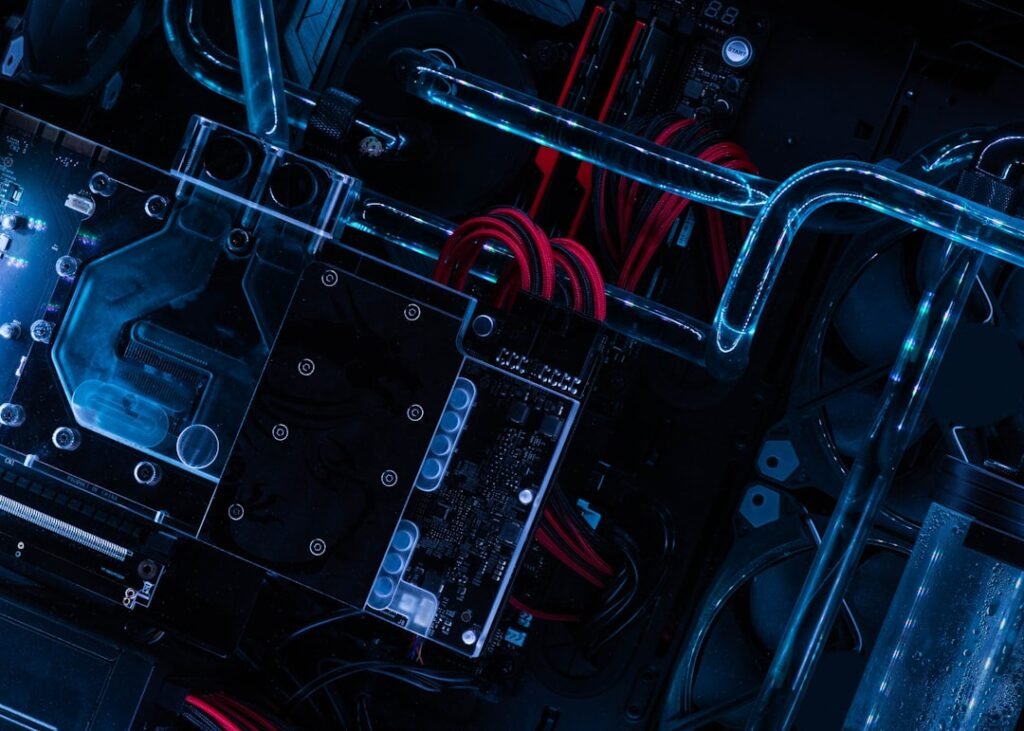
Singapore’s new liquid cooling standard, SS 726:2026, launched August 27, 2026, forces a bifurcated decision across ASEAN data center portfolios: retrofit existing air-cooled facilities with liquid systems, or build new infrastructure from the ground up for liquid cooling. The standard addresses a problem that traditional efficiency targets cannot solve—tropical climate degradation of air-cooled systems, where high temperatures and humidity cause equipment corrosion and accelerated cooling loss, collapsing the ROI math on retrofits.
Developed jointly by Singapore’s Infocomm Media Development Authority (IMDA) and Enterprise Singapore (EnterpriseSG), the standard is the world’s first to address liquid cooling in tropical environments. It emerged precisely as AI workload demand for data center capacity intersects with the regional power grid’s cooling bottleneck, documented in this blog’s August 6 coverage of the 68 TWh load projection.
Why Tropical Climates Break Air-Cooling Efficiency Targets
Singapore’s earlier PUE 1.25–1.3 efficiency standard (proposed 2026, covered August 22) assumes a cooling baseline. But in tropical ASEAN climates—ambient temperatures sustained above 30°C with 70%+ humidity—air-cooled facilities face two problems traditional efficiency upgrades don’t address:
- Equipment corrosion: humidity accelerates oxidation and electrical degradation, requiring more frequent replacement cycles and higher maintenance cost per unit year
- Cooling drift: air cooling efficiency degrades predictably in high ambient temperatures, meaning a facility that hits 1.3 PUE at commissioning may reach 1.5+ within 3–5 years as compressors work harder and filters clog faster
Liquid cooling solves both: by bringing coolant directly to the heat source and managing humidity through sealed systems, it maintains stable cooling performance and equipment lifespan in tropical conditions. The standard reports energy consumption reductions exceeding 30 percent, though the actual competitive advantage is not the energy number—it’s the maintenance cost flattening and the predictability of equipment replacement cycles.
The Retrofit Decision: Cost, Timeline, and Stranded Air-Cooled Assets
For existing ASEAN data center portfolios, this standard creates an immediate capital allocation problem. A facility built in the last 5 years to air-cooling standards now faces three paths:
- Retrofit to liquid cooling: High capex (roughly 15–25% of facility cost for retrofit-grade installation), extended downtime, and risk of failure mid-implementation. Payback depends on power cost, remaining facility life, and CapEx timing relative to lease expiry.
- Operate air-cooled to equipment end-of-life: Accept 3–5 year efficiency drift, higher maintenance cost, and a facility that fails to meet Singapore’s future efficiency mandates (expected to follow in 2027–2028 legislation). Risk: stranded asset if regulations tighten faster than planned.
- Build new, liquid-cooled from ground up: Longer timeline (18–24 months to operationalization), but lock in SS 726 compliance, avoid retrofit complexity, and capture the full 30%+ efficiency gain from day one.
REIT and portfolio managers operating across Singapore, Malaysia, Thailand, and Indonesia now face an uneven playing field. A portfolio that built new facilities in 2025–2026 to air-cooled standards is already capital-constrained if regulatory pressure accelerates retrofit timelines. A competitor that starts a new build today can specify liquid cooling and be regulatory-ready by 2028. The gap between these two positions is roughly 18–24 months of portfolio optionality—and 3–5 percentage points of cooling efficiency, valued at roughly 5–8% annual energy cost difference at ASEAN electricity rates.
What Data Center Operators Should Calculate Before Year-End
SS 726:2026 is voluntary guidance today, but Singapore’s planned Digital Infrastructure Bill (expected late 2026) will likely mandate compliance for new facilities and, within 3–5 years, retrofit timelines for existing operations. Malaysia, Thailand, and Vietnam typically follow Singapore’s infrastructure standards within 12–24 months, though with regional variations.
Portfolio operators should audit three things before September 2026 closes and planning cycles reset for 2027:
- Facility age and efficiency baseline: Existing air-cooled facilities hitting or exceeding 1.4 PUE are already degrading in tropical heat; retrofit ROI improves with each percentage point of baseline inefficiency.
- Lease and CapEx cycles: Facilities approaching lease renewal or major refresh cycles (10–15 years) are retrofit candidates if remaining life justifies the capex. Facilities with 3–5 years remaining typically should wait for end-of-life replacement rather than retrofit.
- Regulatory timeline and customer requirements: If major customers (hyperscalers, financial services firms with ESG mandates) are already expecting liquid-cooled facilities, the competitive pressure accelerates the retrofit decision window.
The August 31 retrofit finance window (deadline today across ASEAN) was designed for envelope and lighting retrofits—low capex, predictable payback. Liquid cooling retrofit finance is different: higher ticket size, longer payback, and greater risk of regulatory change mid-project. Portfolio managers considering retrofit should route those deals through 2026 infrastructure finance programs while availability is highest; by 2027, green taxonomy categories will have shifted and financing terms will tighten.
The REIT and Infrastructure Finance Implication
REITs holding data center portfolios in Singapore and Malaysia (the two markets where regulatory pressure will hit first) face unexpected portfolio bifurcation: liquid-cooled assets will command premium valuations and longer lease terms as customer preference shifts; air-cooled assets will face discount pressure and shortened lease renewal horizons. The valuation gap is not yet priced into most REIT multiples but should be by late 2026 as the Digital Infrastructure Bill moves closer to tabling.
Infrastructure finance programs that completed retrofits to air-cooled standards in 2024–2026 (efficiency upgrades, envelope work) will see their client base face a new round of capex for liquid-cooling retrofit within 3–5 years—if those clients are not already planning for it now. That’s a financing opportunity, but only if structured as a long-tail commitment, not a one-off retrofit.
Key takeaways
- SS 726:2026 (August 27) is the world’s first liquid-cooling standard for tropical data centers, addressing humidity and corrosion problems that air-cooled efficiency targets cannot solve.
- Existing air-cooled ASEAN facilities face a retrofit vs. rebuild decision: liquid cooling reduces energy by 30%+ and stabilizes cooling performance in tropical heat, but retrofit cost (15–25% of facility capex) and timeline (18+ months downtime) require careful ROI calculation.
- Singapore’s planned Digital Infrastructure Bill will likely mandate liquid-cooling compliance for new facilities by late 2026, followed by retrofit timelines for existing operations—creating an 12–24 month advantage for operators starting new builds now.
- REIT and portfolio operators should audit facility efficiency, lease cycles, and customer requirements before year-end; retrofit finance windows close in September 2026, and 2027 financing terms will tighten as taxonomies shift.
- The liquid-cooling standard fragments ASEAN data center portfolios into premium (liquid-cooled) and discount (air-cooled) asset classes over the next 24 months, a valuation gap not yet priced into most REIT multiples.