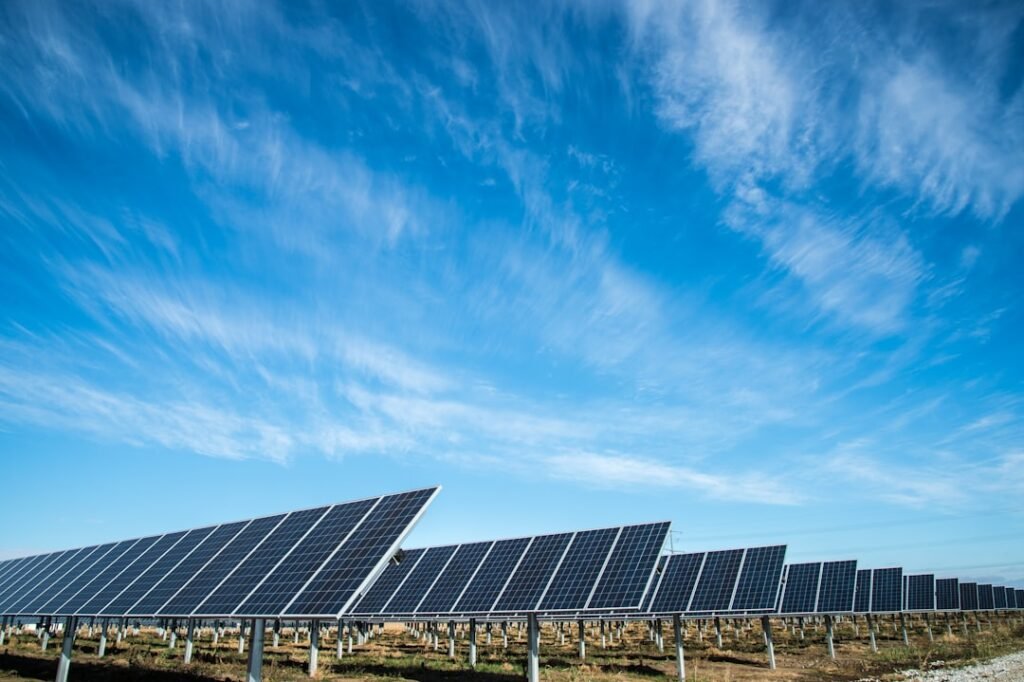
Malaysia’s August 22 approval of 42 renewable energy projects—331 megawatts, RM 4.3 billion in capital, 7,738 indirect jobs—reveals a structural shift in how ASEAN’s grid infrastructure finances itself. REITs and institutional portfolio managers are now bidding directly on solar, hydro, and biomass assets that used to sit in utilities’ balance sheets. For building owners and operators, the implication is sharper: renewable energy infrastructure is no longer an add-on to decarbonization strategy. It is now a competing claim on the same institutional capital pool that funds building retrofits and efficiency upgrades.
What Malaysia Approved on August 22
Malaysia’s Suruhanjaya Tenaga (Energy Commission) published August 22, 2026, the approval of 42 renewable energy projects across three technologies, according to Pocket News Malaysia and The Edge Malaysia. The breakdown:
- Biogas: 16 projects, 26.19 megawatts
- Biomass: 11 projects, 135.94 megawatts
- Small hydropower: 15 projects, 169.23 megawatts
Total capacity: 331.355 megawatts. Total capital: RM 4.3 billion (~USD 1.05 billion at August rates). Employment impact (indirect): 7,738 jobs. Grid connection timeline: 2029–2030.
The announcement, made by Economy Minister Akmal Nasrullah Mohd Nasir, also flagged local manufacturing demand: RM 617 million in orders for gas engines and boilers from regional suppliers. In a single approval batch, Malaysia’s government mapped out one-third of a gigawatt of new generation, a decade-long capital deployment, and a local supply chain anchor point for Southeast Asia’s renewable manufacturing.
Why REITs Are Now Bidding on Renewable Infrastructure
The timescale matters. A 2029–2030 grid entry date aligns exactly with when ASEAN’s data center load is forecast to consume 35–45 terawatt-hours of incremental electricity annually, according to a Manila Times operator survey published August 15, 2026. That creates a mirror image: operators and investors who previously viewed renewable projects as a regulatory compliance cost now see them as a hedge against grid scarcity and tariff escalation.
Malaysia’s 42-project batch is small enough to be nimble (dispersed across three technologies, multiple operators) and large enough to move the needle on grid capacity. For portfolio managers, it offers three competing advantages over conventional building retrofit finance.
First, scale: RM 4.3 billion moves through regulatory approval, construction, and connection in a single cohort. Building retrofits, by contrast, remain fragmented: owner-by-owner, building-by-building, each one a separate financing negotiation with a separate timeline. The Malaysia batch is a 331 MW single-platform investment thesis.
Second, collateral: Renewable generators produce revenue that is fixed, often backed by power purchase agreements with utilities or industrial off-takers. Building efficiency improvements produce cost savings—a softer claim on cash flow. A REIT can borrow against a solar project’s PPA at lower rates than a building retrofit that promises “avoided energy spend.”
Third, policy tail-wind: Malaysia’s EECA (Energy Efficiency and Conservation Act) guidelines were amended across all seven rules on August 12, 2026, according to Suruhanjaya Tenaga. The amendments strengthen the mandatory audit and efficiency-improvement regime for buildings. But mandatory audits and retrofit mandates create compliance costs for building owners; renewable projects create revenue streams for operators. Under identical capital constraints, the revenue play outbids the compliance cost.
The 2029 Grid Constraint and Local Supply Chain
The 2029–2030 connection window is not arbitrary. Malaysia’s grid infrastructure has been under strain since 2024, with peak demand growth outpacing new generation. The 42-project approval is partly Malaysia’s answer to that, but it also marks a ceiling: once these projects are on the grid, there is little incremental room for new demand before the next major infrastructure upgrade. Building owners and operators looking to add air-conditioning load, electrify heating systems, or run new data centers will face a finite window to secure capacity before grid constraints ripple into tariff increases.
The RM 617 million in local manufacturing orders—gas engines, boiler equipment—also signals a constraint: supply chain. Renewable equipment sourcing in Southeast Asia remains import-heavy. Malaysia’s approval of 42 projects with domestic supply-chain anchoring suggests the country is betting on manufacturing differentiation: if you want to deploy renewable capacity in Malaysia, you will use Malaysian-made components. That raises capital costs for smaller developers and creates a high bar for cost-competitive projects.
For REITs, this is actually an advantage. Large institutional investors can absorb higher CapEx through economies of scale and long-duration financing. Smaller building-retrofit operators cannot.
Key Takeaways
- Malaysia’s August 22 renewable projects approval (42 projects, 331 MW, RM 4.3B, 2029–2030 grid entry) marks a shift from utility-owned generation to portfolio-scale renewable infrastructure as an institutional asset class.
- REITs and large portfolio managers now have a competing claim on the same capital pool that funds building energy efficiency retrofits and retrofits, changing the financing ladder for buildings in ASEAN.
- The 2029–2030 grid connection timeline creates a hard capacity constraint: building owners seeking grid capacity additions after 2029 will face tariff increases or long wait times, making retrofit ROI calculations urgent today.
- Local manufacturing demand (RM 617 million for engines and boilers) raises capital costs and supply-chain barriers for smaller developers, concentrating project ownership among larger players—which further advantages REIT-scale capital.
- For buildings competing for energy infrastructure capital, the competitive frontier has shifted: efficiency retrofits now compete not just against each other, but against utility-scale renewable assets with clearer revenue models.