The Grid Ran Out Before the Data Centers Arrived: Why ASEAN’s Power Constraint Cannot Be Wired Away
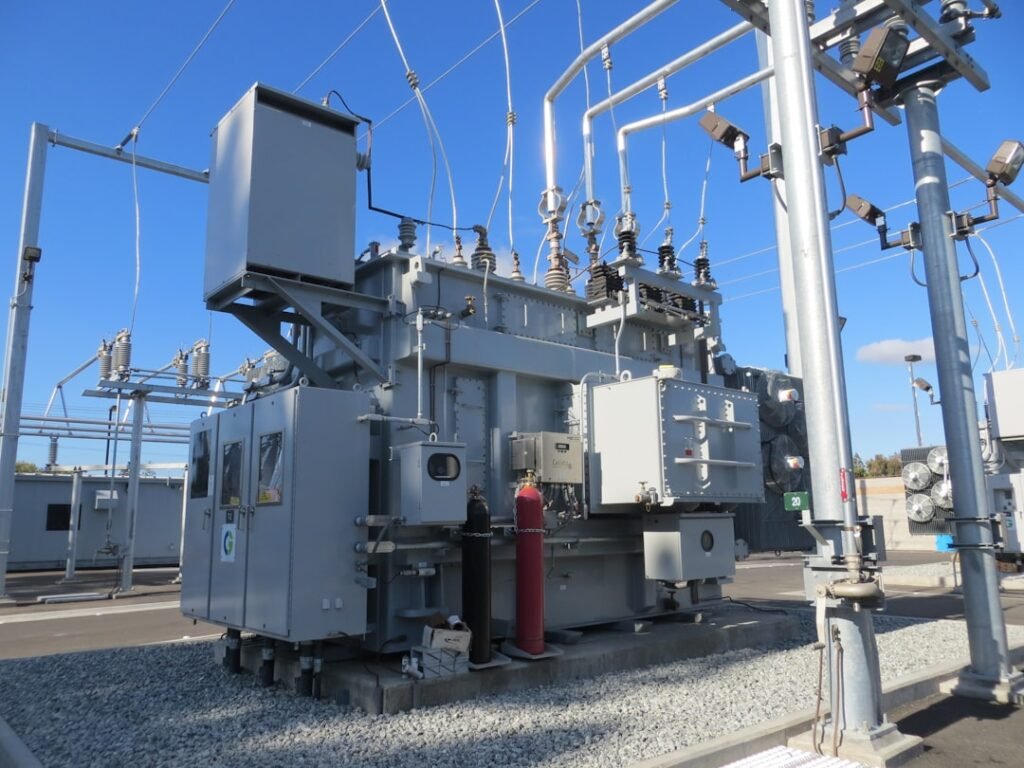
Grid capacity, not capital scarcity, is the binding constraint on data center expansion in ASEAN. A Bain & Company and Standard Chartered analysis released August 15, 2026, exposes a structural mismatch: regional grid operators control where multi-gigawatt loads can connect, and traditional transmission reinforcement takes 5–15 years to complete—a timeline incompatible with data center deployment cycles of 1–3 years. The result is a “grid gatekeeper” problem where the speed of expansion is dictated not by hyperscaler capital but by the regulatory and operational constraints of monopoly utilities managing systems designed for a different load profile.
How discrete loads collide with distributed infrastructure
Data center demand arrives as large, indivisible blocks: 100–500 megawatts per project, with 24/7 reliability requirements and compressed deployment schedules. ASEAN is expected to absorb 35–45 terawatt-hours of incremental data center load by 2030—concentrated in five hubs: Singapore, Johor, Bangkok, Greater Jakarta, Manila, and Batam. This is not gradual load growth. It is discrete, synchronous capacity demand in geographically specific locations.
Regional transmission and distribution systems evolved for dispersed residential and industrial demand, where load growth is diffuse and timing is flexible. A 200 MW factory can often negotiate staged connection and demand management. A hyperscale facility cannot: its entire ROI depends on opening to full capacity on day one. An operator survey cited in the Bain analysis shows that 90 percent of data center investors identify grid connection delays as their top constraint, and many would pay a premium for guaranteed time-to-power.
The gap is not theoretical. Singapore’s grid operator has become the primary throttle on Singapore’s data center market, not the lack of land or power generation. Malaysia’s grid reinforcements for Johor are progressing, but the timeline to 500 MW of dedicated capacity pushes into 2028–2029. Thailand’s grid operator has explicitly capped new data center connections pending distribution-level upgrades. In each case, the bottleneck is transmission, not generation.
Why utilities control the upgrade cycle
Regional grid operators—Tenaga Nasional (TNB) in Malaysia, Singapore Power in Singapore, the Metropolitan Electricity Authority (MEA) in Thailand, Perusahaan Listrik Negara (PLN) in Indonesia—operate as regulated monopolies. Their incentive is cost minimization, not capacity anticipation. Grid reinforcement requires upfront capital, regulatory approval, and multi-year project cycles.
When a hyperscaler approaches with a 300 MW facility and a 18-month construction schedule, the utility faces a choice: (1) fast-track a grid upgrade at cost and risk, or (2) meter the connection and defer the customer. Regulatory frameworks in most ASEAN countries provide little incentive for option 1. Tariff structures don’t reward utilities for preemptive capacity. Inter-country power trade is still nascent—the Singapore-Malaysia 900 MW renewable import deal approved in August 2026 won’t deliver capacity until 2029, and even then adds supply, not necessarily distribution capability in the right geography.
The result: utilities become gatekeepers, and data center expansion is rationed by their willingness to upgrade. This is not a problem utilities created—it is a problem their regulatory environment was never designed to solve.
Who wins when capacity becomes scarce
Scarcity confers negotiating power. The largest, most creditworthy hyperscalers—Hyperscale three-letter players with subsidiary operating companies in region and regional hosting giants like AirTrunk—can afford to wait, negotiate dedicated grid upgrades, and sometimes fund the infrastructure themselves. Smaller operators, regional data center providers, and edge-computing infrastructure firms cannot. They compete for whatever rationed capacity utilities allocate, often finding themselves deprioritized for larger customers or pushed to secondary hubs with slower connections.
Building owners and operators seeking to retrofit existing structures for efficient power cooling are collateral damage. A 50,000-square-meter office building consuming 10 MW has less leverage than a hyperscale facility. If the grid is already constrained, retrofit upgrades are postponed, and the payback calculation deteriorates further as tariffs rise and baseline loads increase—the 68 TWh air-conditioning demand surge observed in earlier analysis is now competing for scarce capacity.
Geographically, the constraint sharpens inequality between ASEAN hubs and secondary cities. Investment concentrates in Singapore, Johor, and Bangkok precisely because those utilities have been forced to expand capacity. Vietnam and Indonesia, facing less immediate data center demand, receive less urgent grid investment—creating a perverse incentive: the more you demand, the more you get; lag behind, and upgrades remain years away.
What the grid constraint means for tariffs and energy transitions
Constrained grids become expensive grids. When utilities cannot expand capacity, they raise tariffs to ration demand. Thailand’s tariff reform in June 2026 included precisely this logic: raise rates for large industrial users (including data centers) to moderate demand and protect household affordability. Singapore’s July tariff shock reflected both fuel costs and grid reinforcement expenses. Malaysia’s automatic fuel adjustment (AFA) mechanism passes through the cost of grid upgrades to all users.
In principle, this is economically sound: capacity scarcity should be priced, and users who consume scarce resources should pay more. In practice, it means ASEAN’s energy transition—which depends on data center-driven demand to justify renewable energy investments and regional power trade—is being governed by the speed of utility capital projects, not by clean energy economics.
The Singapore-Malaysia renewable import deal is illustrative. It was approved in August 2026 and will deliver 900 MW starting in 2029. But that capacity only matters if the distribution network can receive it and route it to where data centers are concentrated. The deal solves generation; it does not solve distribution bottlenecks in Johor or the regulatory arrangements for cross-border capacity management.
The 18-month horizon vs. the 15-year infrastructure cycle
A data center project has an 18-month to 3-year deployment window. Grid reinforcement has a 5-15 year cycle from planning to operation. No amount of private capital can bridge that gap without public coordination. Vietnam’s proposed two-part tariff structure (pilot 2026, nationwide 2027) is one attempt: separating fixed capacity charges from consumption charges, so large users pay for reserved grid capacity upfront. But this requires a regulatory shift that has not yet happened uniformly across ASEAN.
Until utilities are explicitly incentivized—through tariff structures, regulatory mandates, or direct financing—to expand capacity in anticipation of known hyperscaler demand, the grid constraint will remain. This is not a supply-side failure. ASEAN has power generation capacity. It is a coordination failure: the institutions that control transmission are not aligned with the users who need it, and the timescales are mismatched.
Key takeaways
- Data center expansion in ASEAN is now rationed by grid operators, not by capital or land. 90 percent of operators cite grid delays as their top constraint.
- Discrete, large loads (100–500 MW per project) are incompatible with diffuse, slow infrastructure upgrade cycles (5–15 years). Utilities operate with no regulatory incentive to preempt this mismatch.
- Tariff reforms across ASEAN (Thailand, Singapore, Malaysia) reflect grid scarcity pricing. Building owners and smaller operators bear the cost; hyperscalers negotiate dedicated upgrades.
- The Singapore-Malaysia 900 MW renewable import adds generation supply but does not resolve distribution bottlenecks at the geography and timescale where data centers need it (2026–2030).
- Until regional utilities are explicitly tasked and financed to expand distribution capacity as a known constraint, ASEAN’s energy transition will be governed by the speed of monopoly infrastructure projects, not clean energy economics.