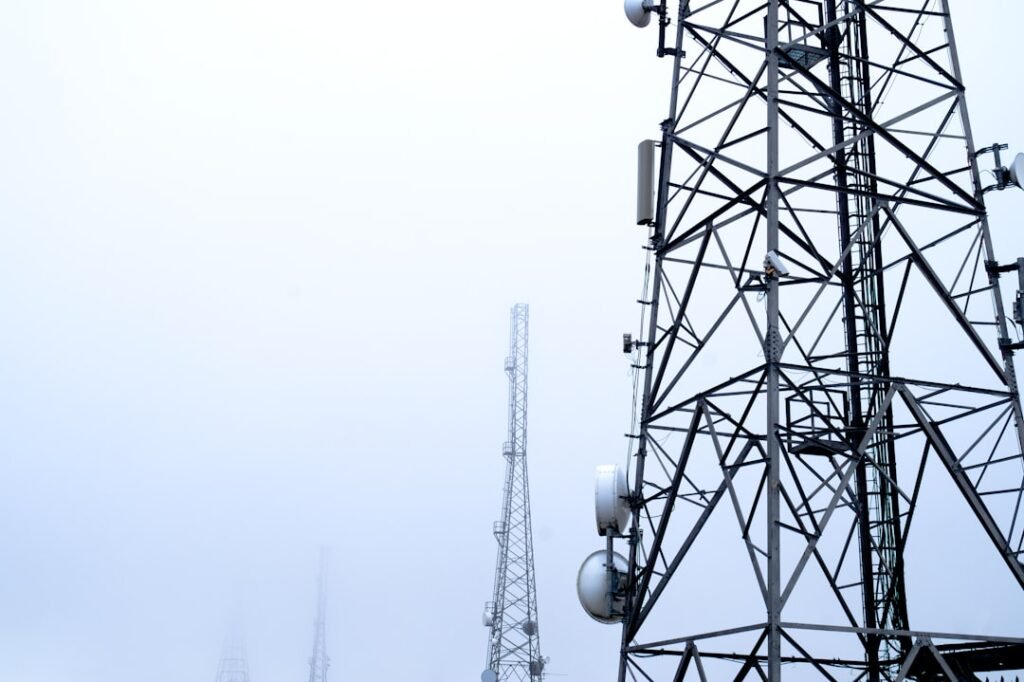
Telegram’s identity layer runs on carrier infrastructure. Every new account — every one of the 2.5 million that open daily — begins with an SMS verification code delivered through a mobile network. Deutsche Telekom, Verizon, AT&T, Vodafone, Airtel, NTT Group, China Mobile: their networks are the authentication backbone of a platform with over one billion monthly active users. That fact has not translated into any discernible namespace strategy from any of them.
The Infrastructure Owners Are Absent From the Namespace
Fragment, the on-chain marketplace for Telegram’s collectible username NFTs, has facilitated over $350 million in cumulative sales since its October 2022 launch. The platform runs on the TON blockchain, issues usernames as NFTs, and prices handles through a live auction mechanism. Liquidity is real: @boss changed hands for 500,000 USDT; @danbao cleared $2.2 million in February 2026; @news established an early benchmark at $1.7 million. When @crypto attracted a $25 million offer in 2025, it reset the price ceiling for category-defining handles.
Telecom brand names — @att, @verizon, @vodafone, @telekom, @airtel, @ntt — are category-defining in precisely the markets where Telegram’s growth is most concentrated. The brands that own those handles in every other major digital channel do not own them on Fragment.
$330 Billion in Brand Value, Zero Namespace Position
Brand Finance’s 2026 telecoms rankings establish the exposure with precision. Deutsche Telekom, the world’s most valuable telecom brand for the third consecutive year, holds $96.2 billion in brand value. Verizon sits at $73.0 billion. AT&T at $53.9 billion. China Mobile at $49.4 billion. NTT Group at $41.9 billion. Vodafone, freshly merged with Three UK and carrying a 29% year-on-year valuation increase, has reached $15.6 billion.
That is more than $330 billion in combined brand value across six carriers — each operating consumer and enterprise services that increasingly run through or alongside Telegram. None of them has closed the namespace gap.
The Enforcement Architecture Offers No Shortcut
IP teams familiar with domain name disputes may assume a UDRP-style resolution pathway exists for Fragment @Names. It does not. Fragment usernames are on-chain NFTs governed by smart contracts on the TON blockchain. There is no ICANN equivalent, no registrar bound by policy obligations to trademark holders, and no enforceable arbitration timeline. The World Trademark Review flagged this enforcement gap when Telegram first launched its username auction: brands pursuing a username held by another party face a claims process with no guaranteed outcome and no enforceable deadline.
The structural consequence is a one-way ratchet. The longer a telecom brand waits, the more likely it is that a commercially sophisticated holder — not a casual early registrant — controls the handle. Sophisticated holders read the same Fragment transaction data everyone else reads. They do not release names cheaply, and they price with reference to the most recent comparable sale, not the one from two years ago.
Vodafone’s Merger Creates a Compounding Problem
The Vodafone-Three UK merger, which completed in 2025, is the clearest illustration of how corporate brand consolidation creates Fragment exposure rather than resolving it. Two carrier brands merging into a single combined entity means consumers, enterprise clients, and regulators will search Telegram for the merged brand name. Whatever they find is the brand experience — and the merged entity controls neither what that experience is nor who profits from directing traffic toward or away from it.
This is not a future-state scenario. Telegram is the primary communications channel for organised fraud operations in several markets where Vodafone and Three previously held large subscriber bases. The impersonation risk attached to an unclaimed @name in that context is an active operational reality for companies whose customer-service and fraud-alert communications increasingly overlap with Telegram’s infrastructure.
The Authentication Irony Has a Hard IP Dimension
The structural irony runs deeper than brand governance. Telegram’s authentication model creates a dependency on carrier infrastructure that no other major messaging platform shares at the same scale. WhatsApp also uses phone numbers, but its ownership sits inside Meta’s brand governance apparatus. Telegram remains independent, and its verification model means the carriers processing those verification codes hold no reciprocal rights or privileges on the platform’s namespace. They authenticate the users. They do not own the names.
For patent counsel and IP licensing teams advising major telecom clients, this is a risk register item with a narrowing acquisition window. Fragment @Names are not fixed-price domain registrations — the auction mechanism means a single determined bidder can set a new floor at any moment. Deutsche Telekom’s $96.2 billion brand is not structurally threatened by an unclaimed Fragment handle. But the cost of acquiring @telekom today is a fraction of what it will cost after a single high-profile impersonation incident surfaces in a market where the company bills tens of millions of subscribers.
The carriers built the identity layer. The namespace built on top of it belongs to whoever moved first. In most cases, that was not the carrier.